Experience · Strategy · consumer products · global scale
15 years translating customer insight into product experience — across consumer tech, health, fashion, and commerce. I partner with cross-functional teams on high-potential, ambiguous problems and lead them to clarity.
Meta
WhatsApp
Instagram
SXF
Savage X Fenty
1M
One Medical
TW
Thoughtworks
Selected Work
Strategy into experience.
WhatsApp · Meta
AI entry points for 3.5 billion people
The brief: bring AI to the world's most private messaging app without breaking the trust that 3.5 billion people place in it. The experience strategy challenge is as complex as the technical one — offer private AI that feels right across radically different cultures, literacies, and expectations of privacy — from São Paulo to Jakarta, from Mexico City to Seoul.
Led customer insight synthesis and concept development for multiple AI experience proposals — iterating from research to prototype to identify what resonates across global contexts and comfort levels with new technology
Defined experience principles for AI in a privacy-first product — how AI should feel, behave, and communicate trust across cultures and technical literacy levels. Produce evals that define model response quality expectations for the experience.
Translated ambiguous strategic direction into shipped product through close collaboration with Engineering, Design, Marketing, Trust & Safety, Legal, Youth, and Policy
AI runs inside Trusted Execution Environments (TEEs) — encrypted in a secure enclave even Meta's servers can't read, making privacy at the center of the offering.
Here's a 5-day itinerary — Day 1: Shibuya & Harajuku…
What are budget-friendly spots?
Great call — here are free highlights by neighborhood…
Meta Reality Labs
Defining "safe" for kids in a brand-new medium
A 0→1 mandate with no precedent: what does a genuinely safe — and genuinely fun — metaverse experience for tweens look like, under intense global regulatory scrutiny? I built the answer from research and global collaboration — co-designing with kids, parents, and regulators across continents so safety and delight were shaped together.
Defined what "safe" means for children in a brand new medium — no precedent, high regulatory scrutiny across global jurisdictions
Conducted global in-person co-design sessions with children in the target demographic, their parents, and regulators
Shipped the first youth-appropriate gaming experiences from Meta
Engaged directly with regulatory bodies in the EU, US, and Australia to co-design standards for safe engagement with online services and gaming
Booking primary care is a deceptively hard matching problem. Working with clinicians, engineers, data science, and design — and grounded in patient interviews, provider shadowing, and usability testing — I led the consumer product org to develop machine learning to read a patient's health history and reported complaint, then pair it with provider availability, encounter complexity, and care-quality metrics, so every appointment is both the right clinical fit and an efficient one.
Built ML that combines a patient's health history and reported visit reason with provider availability, encounter-complexity scoring, and care-quality metrics to match each patient to the right form of care
Drove higher patient satisfaction and office efficiency, kept appointment on-time rates high, and held patient-care quality scores at the top of the industry
Built and led the consumer product org pre-IPO — One Medical is now Amazon's flagship healthcare offering
ML / Care MatchingProvider MatchingQuality & EfficiencyPre-IPO Scale
SXF
Savage X Fenty
Founded by Rihanna
$3B
brand valuation
Head of Product
Shipped Combined Sets — mix-and-match sizing in a set — built from returns & review-data insight that no body is one size head to toe
Led a distributed product org — LA-colocated, remote US, European ops in Barcelona, extended staffing in the Philippines
Drove record YoY revenue growth through fit, AOV, and inventory sell-through
Led experience strategy for the Adidas Women's App — customer journey mapping, concept validation, and design direction for a global consumer audience
Facilitated design sprints with Hilti in England and Liechtenstein — translating stakeholder insights into product opportunity frameworks and rapid prototype validation
In-market across Germany (Adidas), Switzerland (Credit Suisse), England and Liechtenstein (Hilti), Canada (Aldo), and Brazil — including retail innovation strategy for a leading Brazilian grocer
Delivered customer journey maps, opportunity frameworks, and strategic artifacts for enterprise clients navigating ambiguous digital transformation
Strategy is only as good as the experience it becomes.
I'm an experience strategist with 15 years translating customer insight into product. At Meta, I'm leading experience strategy for WhatsApp AI — designing entry points for 3.5 billion people across different cultures, contexts, and expectations of privacy. Before that, I was founding GPM for Instagram's ML & Product Fairness initiative, developing systems thinking for how algorithmic ranking shapes the experience of over 3 billion people and roughly 50 million creators.
Earlier, I spent four years as an Exec Operating Partner at Thoughtworks, embedded with global brands — Adidas (Germany), Hilti (England and Liechtenstein), Credit Suisse (Switzerland), Aldo (Canada), and others — building deep in-market fluency across European and Latin American contexts while doing exactly the kind of work that sits at the intersection of strategy and experience: customer journey mapping, design sprints, executive workshops, and opportunity framing. Before Meta, I was Head of Product at Savage X Fenty and One Medical, leading and partnering with product orgs through growth and scale. I'm most energized by ambiguous problems — solved alongside great cross-functional teams — where the design of the experience is inseparable from the strategy itself.
Open to experience strategy, product strategy, and senior product leadership roles — as well as fractional executive engagements and advisory work. Particularly interested in consumer products at the intersection of design, commerce, and AI.
Savage X Fenty was built on a promise — lingerie that fits and celebrates every body. The flagship product expression of that promise was Combined Sets: letting a customer buy a coordinated set of two or more pieces and choose a different size for each — because almost nobody is one size head to toe.
The ambiguous problem
Sets are sold as a single SKU at a single size, which quietly excludes the majority of real bodies — the customer who needs a large top and an extra-large bottom. Forcing one size per set hurt fit, drove returns, and broke the brand's inclusivity promise at the precise moment of purchase. Fixing it was never just a UI change: the fulfillment and inventory systems themselves had to support mixed sizing inside a single set.
Finding the insight
The mixed-size pattern wasn't a hunch — it surfaced from the evidence. Partnering with the analytics and CX teams, we analyzed returns and size-exchange behavior, then mined customer reviews and support tickets where fit complaints clustered. The picture was consistent: people were buying a set and sending back the half that didn't fit. That's what pointed to letting customers buy two sizes in one set from the start.
My mandate
As Head of Product I led a distributed product organization — co-located in LA, remote across the US, with European operations based in Barcelona and extended staffing in the Philippines. I partnered closely with marketing, software & garment design, engineering, merchandising, and operations, and drove Combined Sets from storefront UX all the way through the fulfillment and inventory systems.
Approach
Reframed a "set" as a basket of independently-sized items, not a fixed bundle — mix and match sizes across every piece. This includes updates to processes and tools within fulfillment centers.
Drove the change end to end — storefront UX for per-item sizing, plus fulfillment and inventory that pick, pack, and account for a mixed-size set as one purchase.
Turned the basket into a merchandising lever — assembling sets from orphaned and odd-size inventory at a discount to lift sell-through.
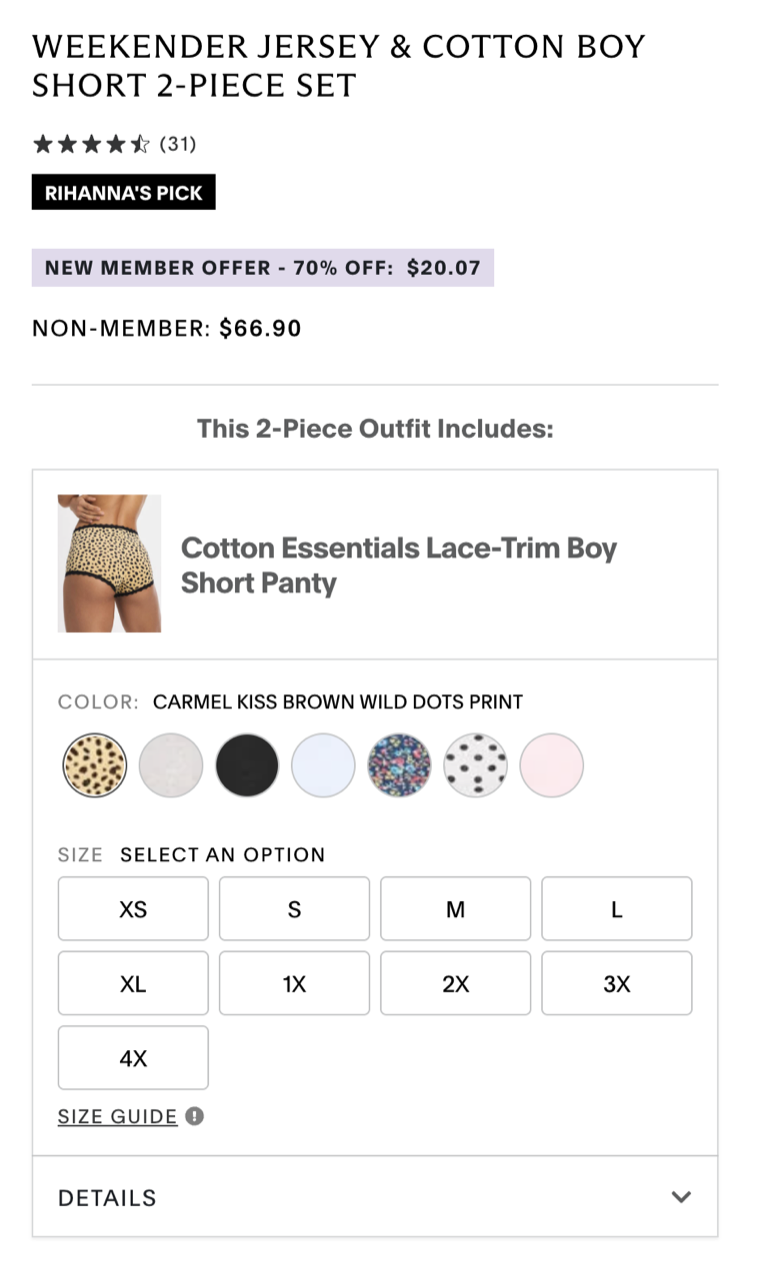
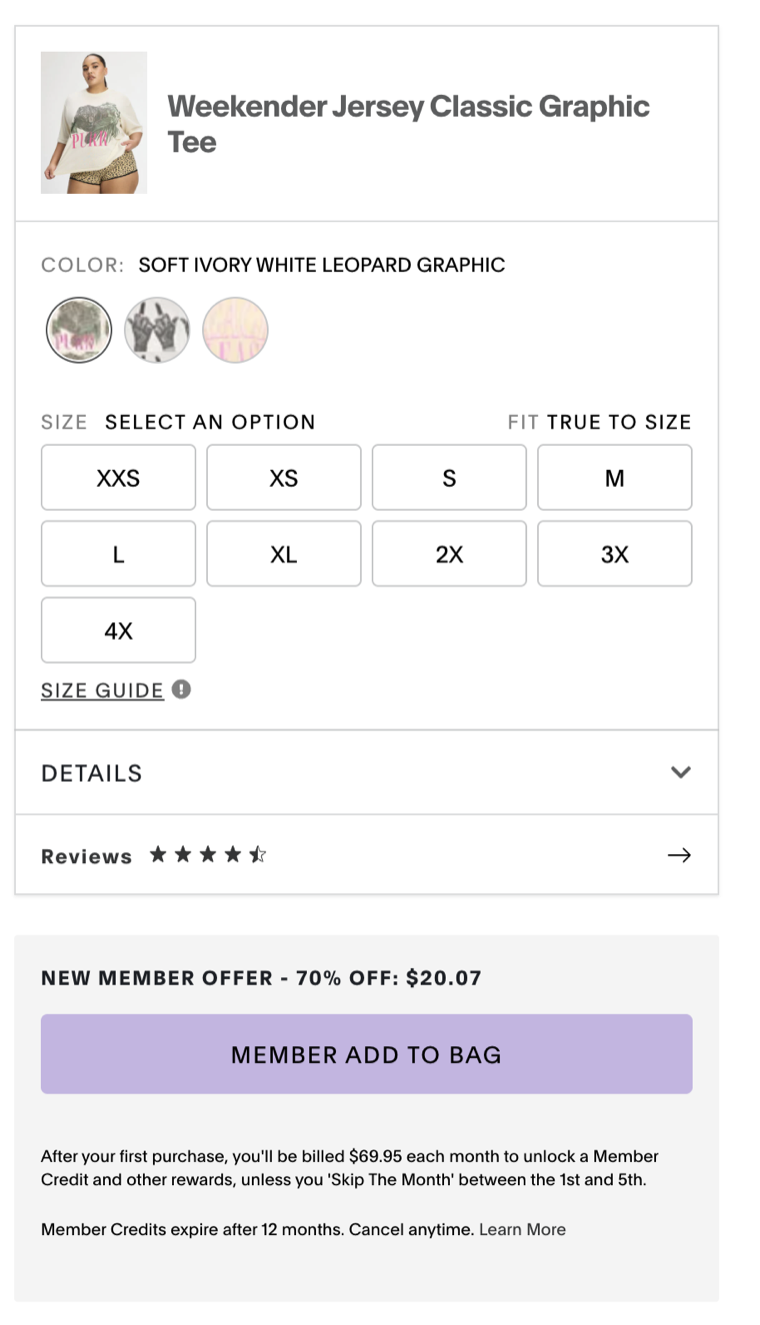
Combined Sets — a multi-piece set with an independent size selector for each item, across an XS–4X range.Sets merchandised as member offers — basket pricing that lifts order value, with transparent VIP terms.
Combined Sets — buy a 2+ piece set, a different size per item; mixed sizing supported through fulfillment and inventory.
A cross-brand size-comparison tool — mapping Savage X sizing against brands the customer already knows, and surfacing models wearing the size the shopper is seeking.
A basket-based merchandising lever — discounted sets from orphaned inventory to improve sell-through.
Impact
Body positivity, made literal — served customers whose proportions differ across their body, instead of forcing them into one size.
Higher average order value through the basket/set approach, and improved inventory sell-through — including monetizing orphaned stock that would otherwise sit.
Stronger consumer trust and brand advocacy from clearer membership management.
Contributed to record year-over-year revenue growth for the brand, which reached a $3B valuation.
Combined SetsFit & Body PositivityInventory Sell-throughAOV / Basket
WhatsApp · Meta · 2024–Present
AI entry points for 3.5 billion people
The brief: bring AI to the world's most private messaging app without breaking the trust 3.5 billion people place in it. The experience-strategy problem was as hard as the technical one — designing an experience that felt right across radically different cultures, literacies, and expectations of privacy, from São Paulo to Jakarta and Mexico City to Seoul.
Side Chat brings private AI into WhatsApp — running inside a secure enclave (TEE), so the conversation stays encrypted by design.
The ambiguous problem
AI had to arrive inside a product whose entire value is privacy and intimacy. Get the entry points wrong and you erode the trust that makes WhatsApp WhatsApp. There was no established pattern for how AI should announce itself, behave, or communicate trust in a space this personal — and whatever shipped had to work across the most diverse user base on earth.
My mandate
I led new primitives with AI — including private AI — for WhatsApp, owning customer-insight synthesis and concept development for the AI experience.
Approach
Led insight synthesis and concept development across multiple AI experience proposals — research → prototype to find what holds up across global contexts.
Defined experience principles for AI in a privacy-first product: how AI should feel, behave, and signal trust across cultures and literacy levels.
Translated ambiguous strategic direction into shipped product with Engineering, Design, Trust & Safety, and Policy.
What shipped
Incognito Chat with Meta AI — a fully private way to use AI inside WhatsApp.
AI that runs inside Trusted Execution Environments (TEEs): encrypted in a secure enclave even Meta's servers can't read — privacy as a design constraint, not a disclaimer.
Impact
Shipped an AI surface available across WhatsApp's 3.5B-user base.
The privacy approach is fully publicly auditable — the encryption guarantees are traceable and verifiable by independent security and privacy experts, not taken on faith.
Independent auto-parts resellers and salvage operators run a high-volume business on spreadsheets, phone calls, and memory. I immersed myself in that overlooked vertical, mapped the real workflow, and built DerbyDay to collapse the whole pipeline into one flow.
The VIN-decoded intake — one scan turns a vehicle into a priced parts checklist, ready to list.
The ambiguous problem
Resellers lose hours per vehicle to manual VIN lookup, part valuation, and re-listing the same inventory across platforms. The market is underserved by software because the users are non-technical and the domain is unglamorous — exactly why the experience bar has to be lower-friction, not higher.
Approach
Learned a niche vertical from the ground up — interviewing recyclers and resellers to understand pricing instincts, trust dynamics, and where the manual pipeline breaks.
Designed for a technology-averse user: no jargon, no setup, no dashboard to learn — a single guided flow that mirrors how they already work, so the software disappears.
Turned domain complexity (VIN decoding, fitment, fair-market pricing, cross-platform listing rules) into one-tap decisions the user can trust.
What shipped
AI decodes the VIN, generates a priced parts checklist, and pushes listings to Facebook Marketplace, eBay, and Shopify in one workflow.
Multi-tier subscription with usage-based pricing, upgrade gates, and a freemium entry point — built zero to production in collaboration with Claude.
Impact
A live, in-market product taken solo from zero to production with Claude — this one's a craft and 0-to-1 story; traction metrics are still early.
Next.jsClaude APIClaude DesignStripe0→1 Founder
Instagram · Meta · 2020–2023
Solving the "shadowbanning" problem
Across Instagram — a platform reaching over 3 billion users and roughly 50 million creators — people were convinced they were being secretly throttled, "shadowbanned." It was the platform's most corrosive trust problem. I owned it. I used algorithmic fairness as the vehicle to confidently get to the bottom of it, then made the system honest with people about when something had actually gone wrong.
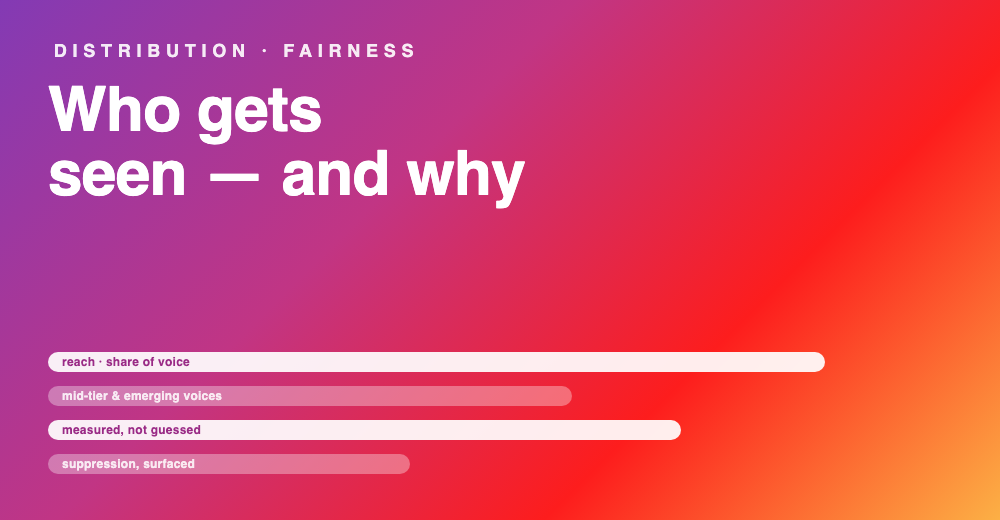
Turning a fuzzy grievance into a measurable discipline — reach, suppression, and share of voice.
The ambiguous problem
"Shadowbanning" was everywhere in the discourse but undefined in the product — a widespread conviction that Instagram was quietly suppressing certain voices. You can't refute or fix a belief like that without a rigorous way to measure distribution. Left unanswered, every ranking change or bug fed the conspiracy and eroded trust in the company itself.
Fairness as the vehicle
I built the algorithmic-fairness investigation as the means to confidently address shadowbanning — defining and measuring reach rates, suppression rates, and share of voice. That gave us, for the first time, the ability to prove where suppression was genuinely happening, where it was a bug, and where it was a misunderstanding — and to act on each differently.
What shipped — a suite of transparency levers
A fairness measurement system was the foundation. On top of it, I delivered four interlocking transparency features so users never had to guess what the system was doing to their content:
System Cards report. A public report laying out exactly how Instagram's systems work across every recommendation and feed surface — what they prioritize and consider when distributing or suppressing content — so every user has the same information insiders do.
Reach-suppression notifications. When a platform outage or system bug causes content distribution to drop, affected users are notified directly in their Activity Feed — with a resolution update when the issue is fixed. No more wondering if the silence is intentional. This was the first time Instagram proactively surfaced operational failures to the creators they affected.
Content-level flag explanations. When a post may not meet content or community standards, the user is told what was flagged and why — so they can remedy it, appeal, or carry the awareness forward. Ambiguity replaced with specificity.
Account Status — a unified distribution dashboard. A dedicated tool inside Settings that shows, at a glance, a user's overall account standing, recommendation eligibility across every surface (Explore, Reels, Feed Recommendations, Search, Suggested Accounts), any active policy flags, and a direct path to appeal via "Request a Review." For the first time, any creator could see exactly where their content was — or wasn't — being recommended, and why.
Alongside the transparency suite: content-eligibility policy spanning safety, integrity, social/political sensitivity, and cultural context — what's divisive in one market is mainstream in another.
Converted a viral, trust-destroying grievance into a transparent, measurable, and fixable problem — replacing speculation about "shadowy practices" with visible acknowledgment and resolution.
Co-authored Instagram's public equity update detailing this work, and the System Cards now published in Meta's Transparency Center.
Increased platform transparency reduced the volume of claims against Instagram for adverse treatment, and gave users impacted by community-standard violations a clear route to self-service remediation — building trust through transparency.
Became Instagram's internal authority on distribution: how content is served fairly, and how over- or under-enforcement of policy shapes the cultural zeitgeist.
One Medical · Head of Consumer Product · Now Amazon Health
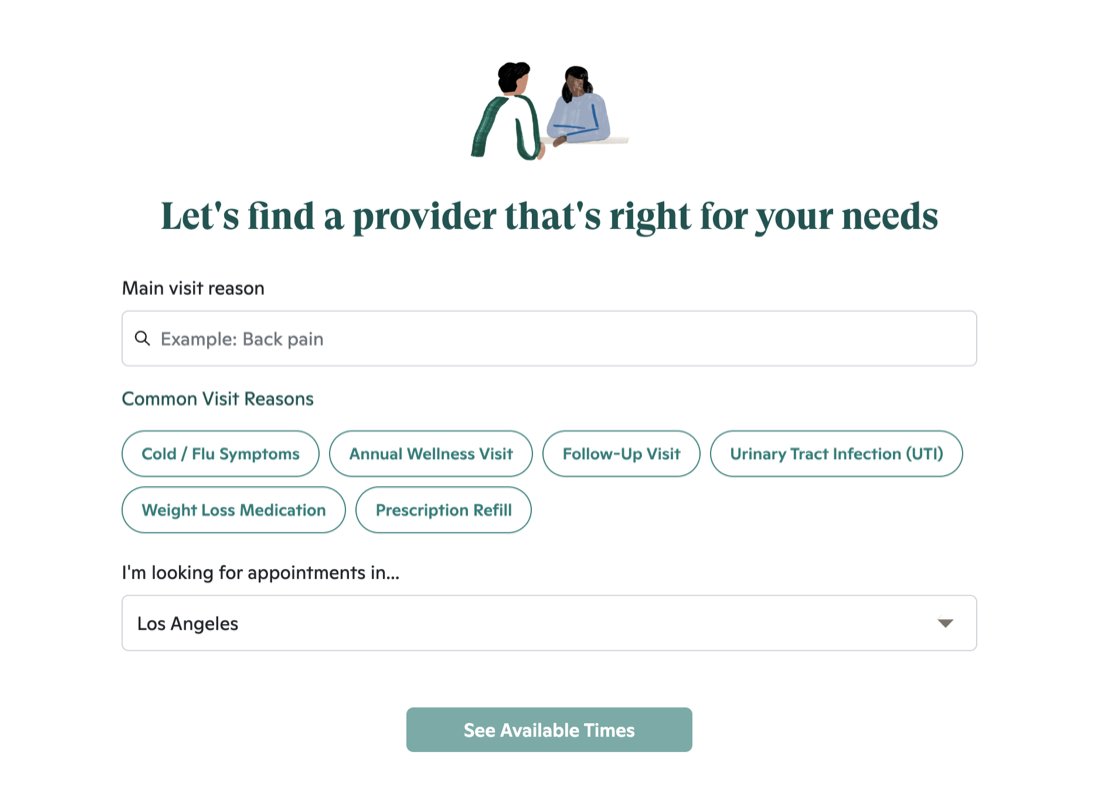
Matching every patient to the right care
Booking primary care looks simple and is anything but: the "right" appointment has to satisfy the patient, the provider, the schedule, and the standard of care all at once. I led the consumer product organization that turned that into a machine-learning problem — and made the answer feel effortless to the patient.
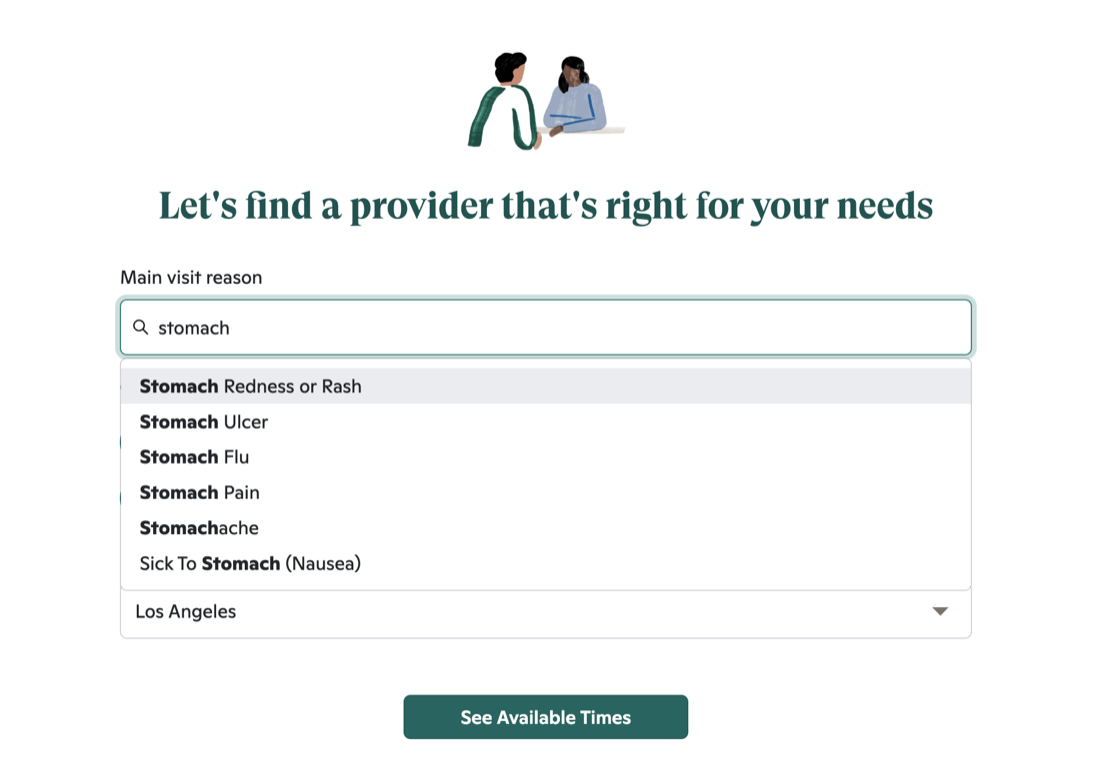
The entry point — a patient states their reason for the visit in plain language; the system does the matching behind it.
The ambiguous problem
Matching a person to the right care is a genuinely hard, multi-variable trade-off. Match too loosely and you waste scarce clinician time, push out on-time rates, and send patients to the wrong level of care. Match too rigidly and people can't get seen. The experience had to earn trust in a domain where the stakes are health, not convenience — while quietly solving an optimization problem in the background.
Grounded in the field
The model started with people, not data. We ran patient interviews and journey-mapped how someone actually chooses and books care; shadowed providers and front-desk staff to understand scheduling realities and encounter complexity; and usability-tested the visit-reason and matching flow with real patients before launch. Working hand in hand with clinicians, data science, and design, that field work is what defined which signals the matching engine should weigh — and how the experience should feel.
The approach — ML matching
Building on that research, we created a system that reads what it knows about the patient — their health history and the complaint or visit request they report — and pairs it with the realities of the practice: provider availability, a complexity score for the likely encounter, and care-quality metrics. The output is an appointment that is the right clinical fit and an efficient use of the schedule.
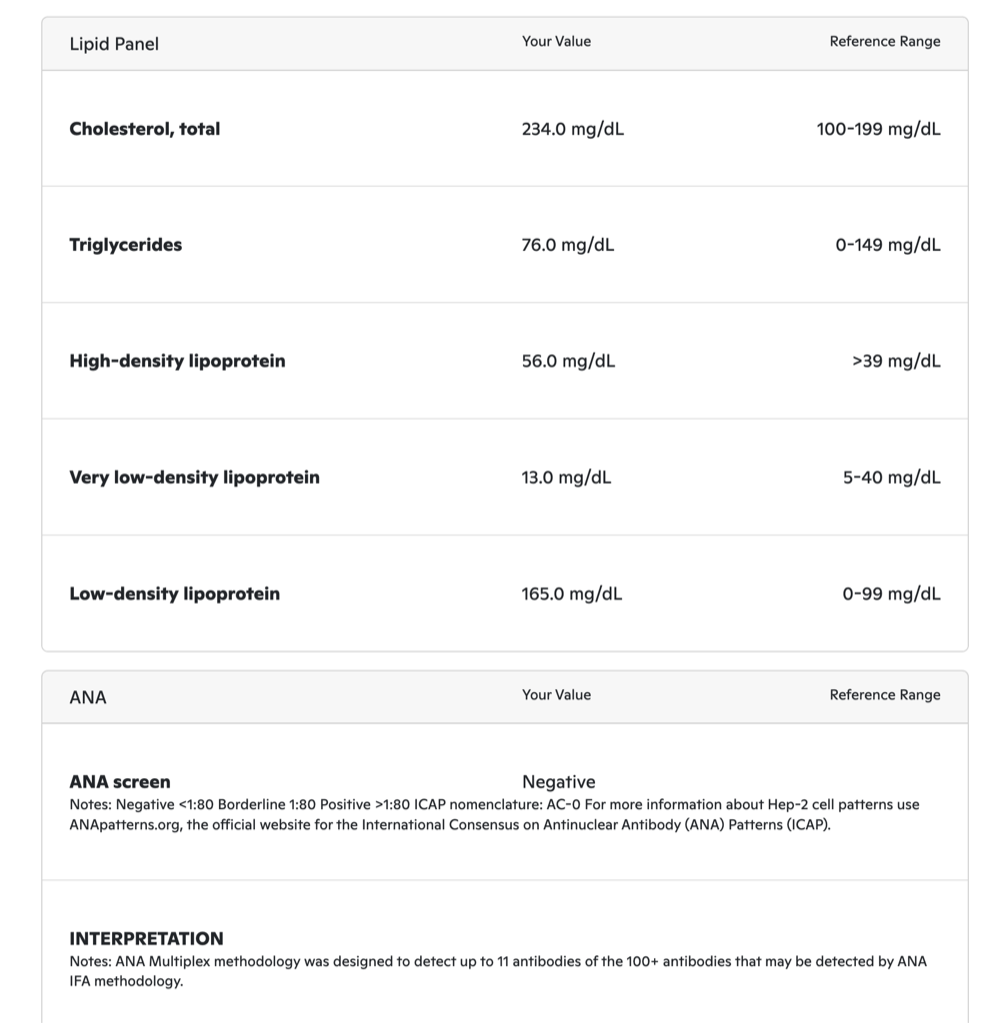
Reported complaint, captured in the patient's own words and structured for matching.Health history and results, legible to the patient — and an input to the match.
What shipped
An ML matching engine combining patient health history and reported visit reason with provider availability, encounter-complexity scoring, and care-quality metrics.
A plain-language entry point that hides that complexity — the patient simply says why they're coming in.
Consumer-first mobile access to prescriptions, lab results, and personal health data.
Impact
Improved patient satisfaction and office efficiency.
Kept appointment on-time rates high as volume scaled.
Held patient-care quality scores at the top of the industry.
Built and led the consumer product org pre-IPO; One Medical is now Amazon's flagship healthcare offering.
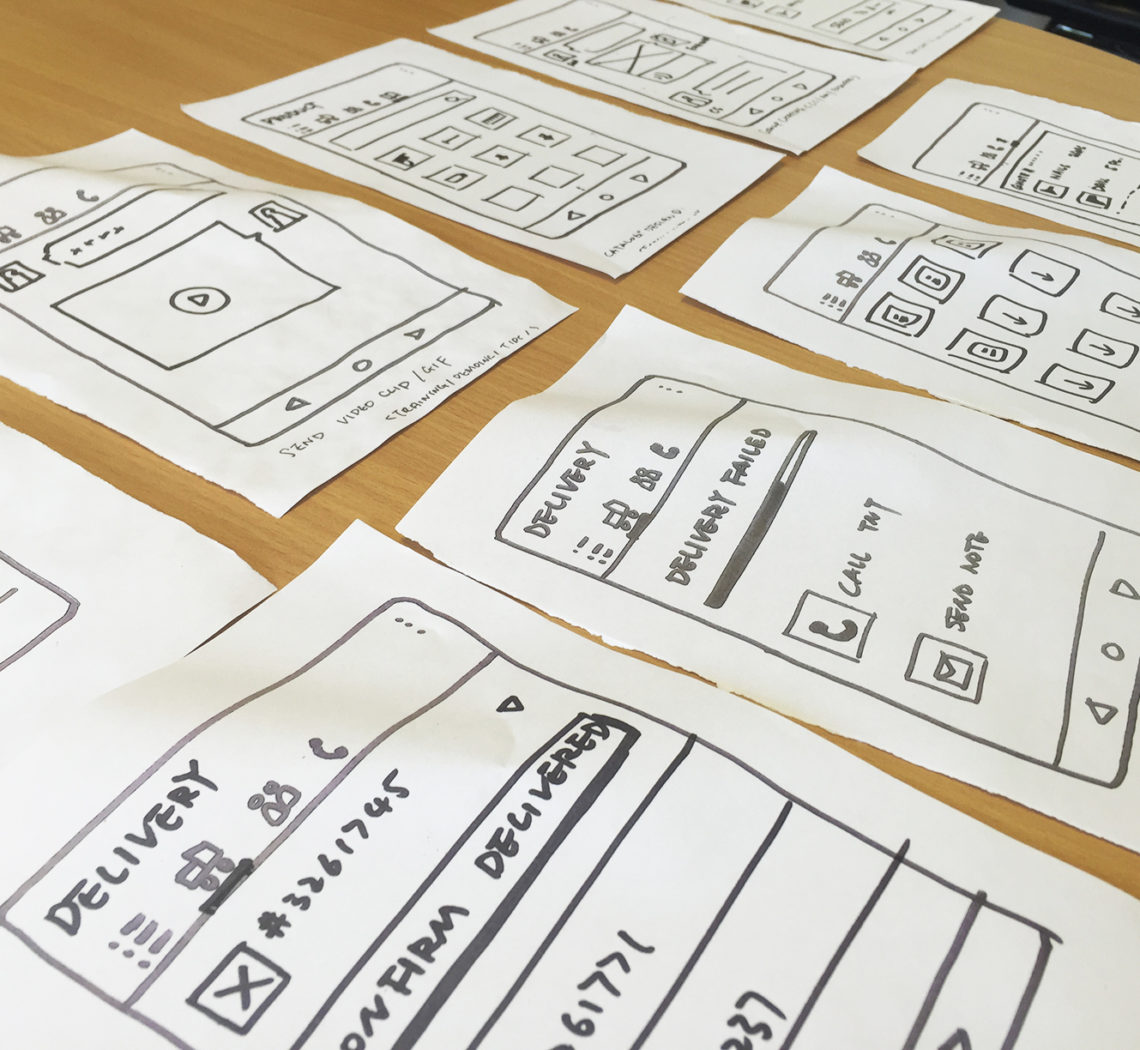
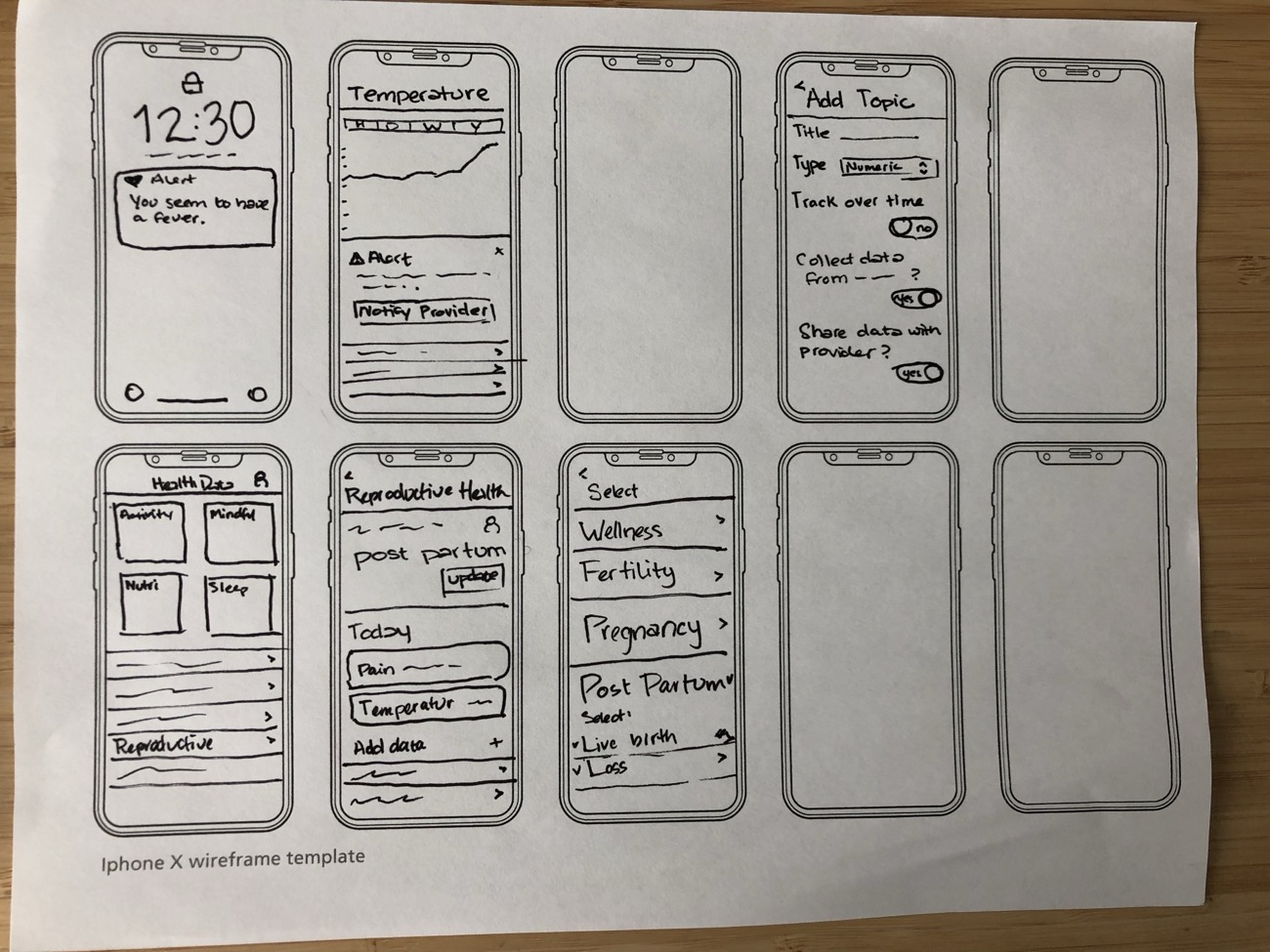
Early product thinking — sketching the experience before the system.
ML / Care MatchingProvider MatchingQuality & EfficiencyPre-IPO Scale
Meta Reality Labs · Head of Youth, Metaverse
Defining "safe" for kids in a brand-new medium
A 0→1 mandate with no precedent: what does a genuinely safe — and genuinely fun — experience for young people look like, under intense global regulatory scrutiny? I led youth safety from the immersive metaverse to the supervision and well-being controls that protect teens day to day — built from research, not assumptions.
The ambiguous problem
There was no playbook for youth safety in an emerging immersive medium. "Safe" couldn't be a checklist bolted on at the end; it had to be designed into the experience from the first concept, satisfy regulators across multiple jurisdictions, and still be something young people actually wanted to use.
Approach — co-designing safety with kids, parents, and regulators
Ran global in-person co-design sessions with children in the target demographic, their parents, and regulators — so safety and delight were shaped together from real input, not assumed by adults guessing at what kids need.
Engaged directly with regulatory bodies in the EU, US, and Australia to co-design standards for safe engagement with online services and gaming.
The hard part: evaluating every dimension of an immersive social experience
A safe youth experience in a social VR environment isn't a toggle — it's a complete re-evaluation of every interaction primitive in the platform. We went dimension by dimension:
Audio & spatial sound. In immersive VR, audio is directional and intimate in a way 2D apps are not — voices feel physically present. We defined exactly who a young user could hear, at what proximity, and under what conditions a stranger's voice could reach them at all.
Microphone access & voice interactions. Microphone defaults, push-to-talk vs. open-mic, and permission flows were rethought from scratch for the youth cohort — ensuring young users had real control and that accidental broadcast was impossible.
Peer-to-peer interactions. Every direct-interaction verb — approaching, following, messaging, gifting, touching — was individually assessed: which ones to allow, restrict, or disable outright for young users, and how to handle the asymmetry when one user is under 13 and another is not.
Spawning and world travel. Young users needed clear guardrails on where they could go. We evaluated the full world-graph — which experiences were accessible, which required an age gate, which were entirely off-limits — and built the routing and access logic to enforce it at the platform level, not just per-experience.
A novel age-ratings system for individual experiences. No standardized framework existed for rating VR experiences for youth appropriateness. We built one — defining rating criteria, the review process for new experiences, and the enforcement mechanism to prevent under-age access to content that didn't meet the standard.
Friend graph permissions. Who can send a friend request to a young user? Who can they follow? What does a parent need to approve, and what is the young user's own agency? We mapped every friend-graph action and designed a permission model that preserved the social experience while ensuring no unsolicited contact from unknown adults.
Mixed-age group handling. Perhaps the most complex scenario: what happens when a young user enters an experience that also contains adults? We evaluated every interaction surface in mixed-age contexts and defined a tiered model — some experiences allowed mixed-age participation under defined rules; others required age-homogeneous groups; others triggered auto-restrictions on adult-to-youth direct contact.
The goal throughout was not to build a "kids version" that felt stripped-down or punishing — it was to make the full experience feel age-right, safe by design, and genuinely fun. Every restriction was evaluated against whether a child would notice it as a loss. Where the answer was yes, we found a different path.
What shipped
Shipped parent-managed accounts on Meta Quest and Horizon — supporting the youngest cohort of users (ages 10–12) ever in Meta's social-experience history.
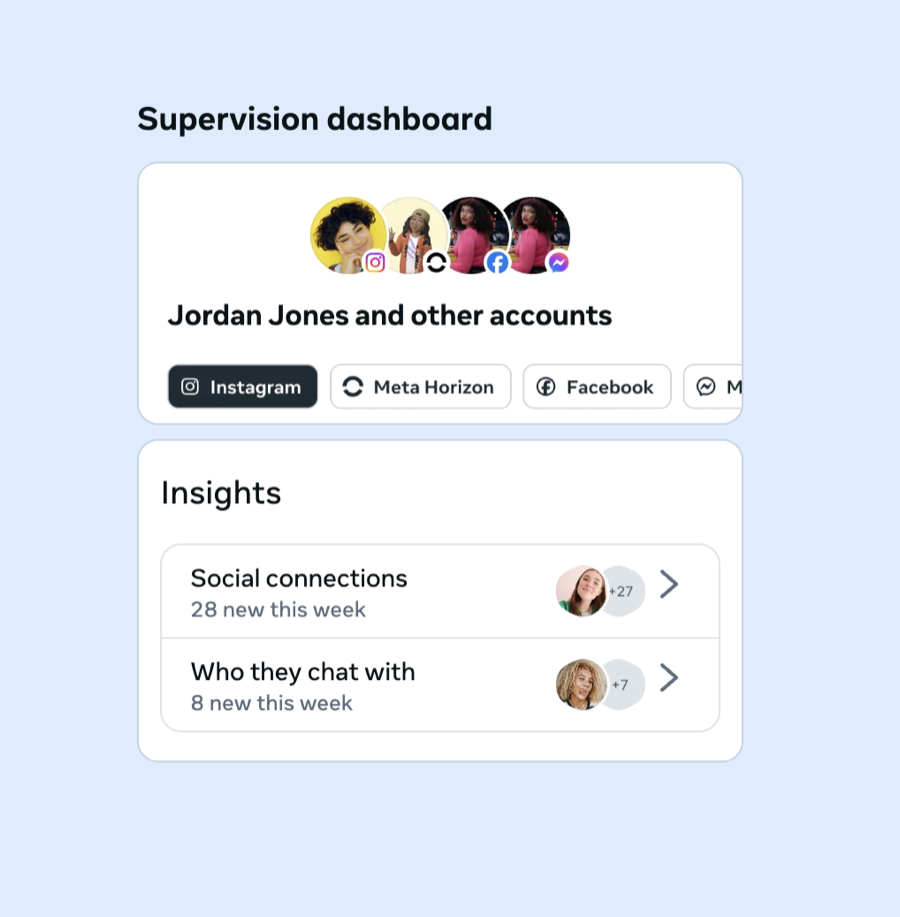
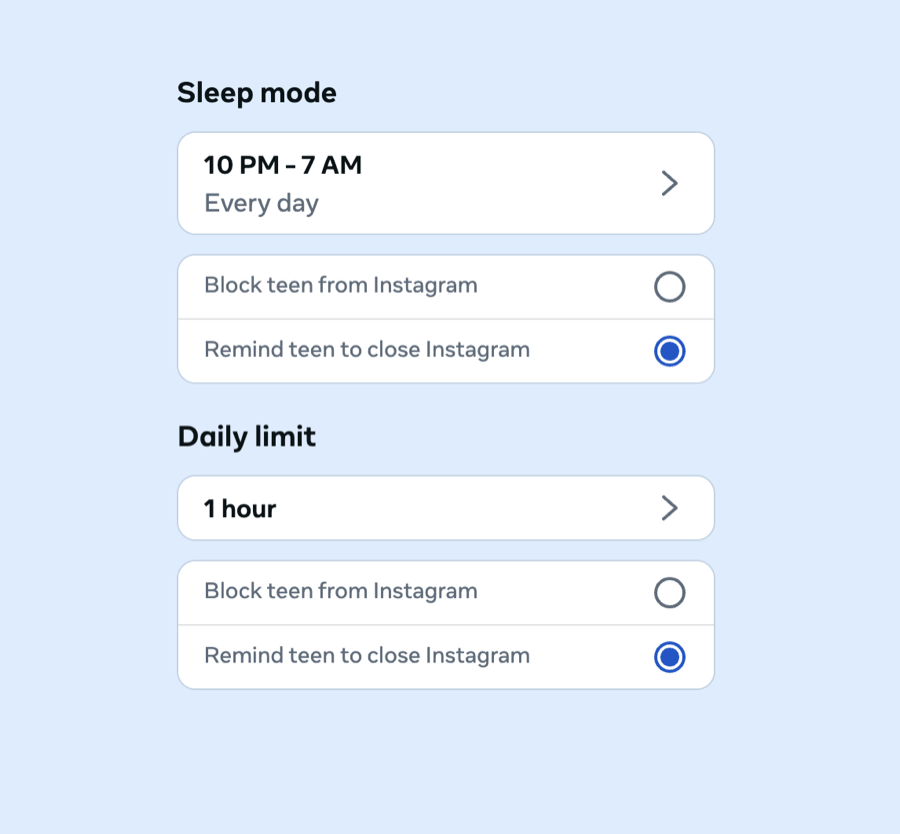
Teen supervision and well-being controls — parental visibility into social connections and app activity, sleep mode, and daily time limits that nudge rather than punish.
Supervision dashboard — age-appropriate visibility for parents across a teen's accounts.Well-being controls — sleep mode and daily limits that nudge rather than punish.
Impact
Broadly considered the most successful youth-focused launch in Meta's history — it garnered zero negative press and dramatically reduced the safety risks posed to young users.
The Horizon Worlds parental-supervision work was named a Webby Awards 2025 honoree.
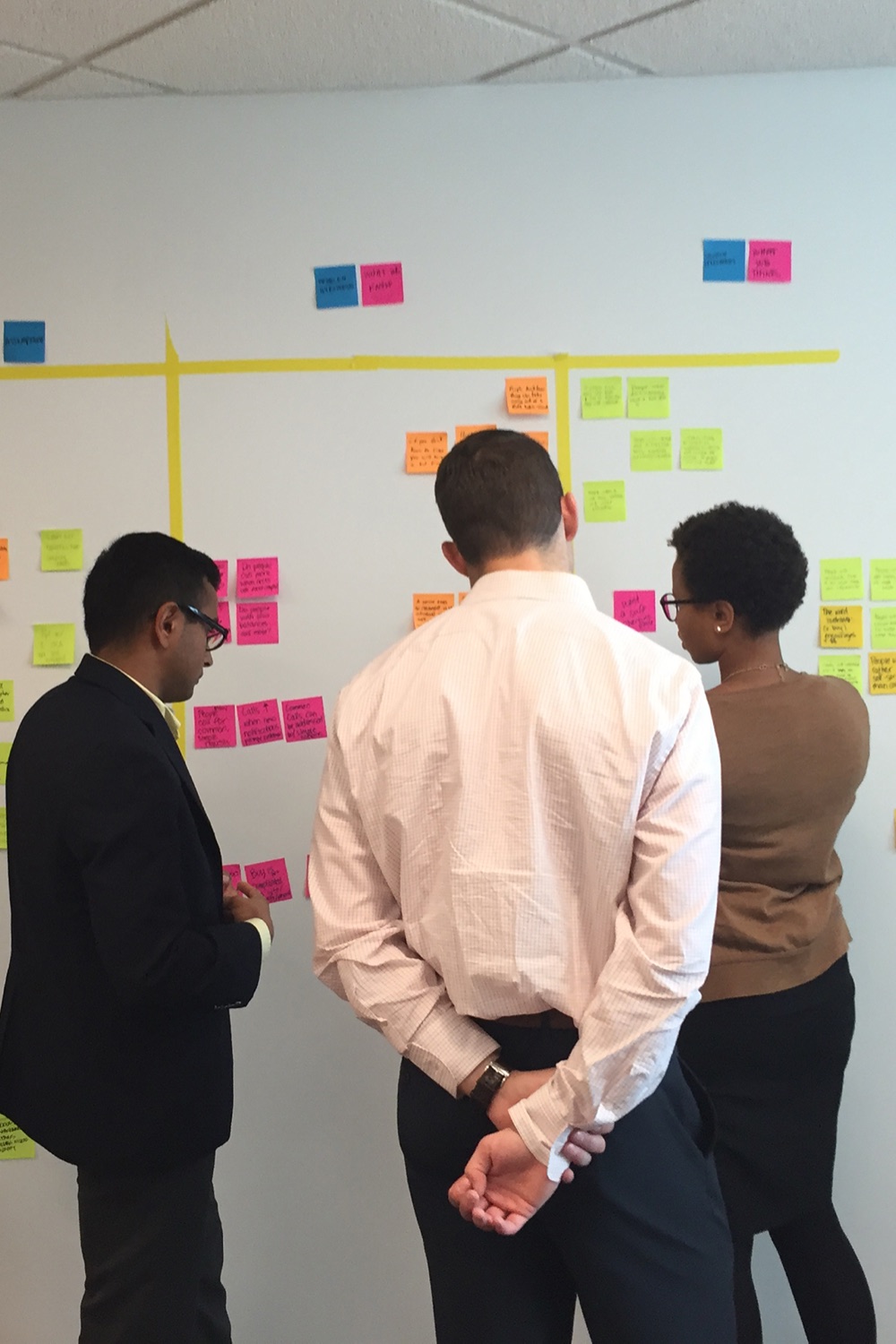
Four years embedded with global brands doing exactly the work that sits at the intersection of strategy and experience — customer journey mapping, design sprints, executive workshops, and opportunity framing — building deep in-market fluency across European and Latin American contexts.
Jobsite research — in the field at a Hilti construction site, where the real workflow lives.Opportunity mapping — synthesizing research into prioritized bets with the Vanguard team.
Flagship engagements
Adidas Women's App (Germany) — led experience strategy and shipped the app to production within three months of aligning on the path forward. Drove the org shift from an IT-delivery arm to true product-organization standards — installing product teams and helping hire the leaders to carry the work forward.
Hilti design sprints (England & Liechtenstein) — delivered a suite of validated opportunities to extend their digital experiences (construction job-site management, procurement), helping the org secure additional funding to scale the team 5×.
Brazilian grocer (retail innovation) — built an in-store innovation lab at the retailer's flagship location, tackling customer-experience, store-operations, and supply-chain challenges with new technology — and left behind a format for teams to continue the innovation work beyond the engagement.
In-market range
Germany (Adidas), Switzerland (Credit Suisse), England & Liechtenstein (Hilti), Canada (Aldo), and Brazil — delivering customer journey maps, opportunity frameworks, and strategic artifacts for enterprises navigating ambiguous digital transformation.